
Chapter 6
Work as a product
PDF page 60In this chapter
A role can take shape without anyone deciding what it should be. Someone leaves and their duties go to the nearest available person. A new client brings an extra responsibility. A title changes to make a salary band work. Eventually, the company advertises the accumulated job as though somebody designed the whole thing.
That is the fixed box I want you to question. Some of its contents will be necessary. Others may be habits, temporary arrangements or unresolved disagreements that have become part of someone's working week. Hiring a more capable person doesn't settle which is which. Before asking someone else to take it on, we have to examine what we are offering them.
Design the work for both sides
PDF p. 60Dart Lindsley hosts Work for Humans, which, as titles go, isn't a bad name to build a whole methodology under. His view of Work as a Product has helped me think about employees as customers of the work a company offers.1 A person chooses the work for what it offers them. The business needs that work to produce an outcome. The manager has to understand both and improve the conditions in which the work happens.
When I spoke with Jennah Robichaud about this approach, she described being wary of its language at first. She wanted to move away from a view of organisations built around extracting more from people. Treating work or employee experience as a product sounded as though it could carry that same thinking into another part of the business. As she explored the ideas, she found an approach closer to the human-centred design that interested her, with ways to put it into practice.2
Her concern belongs in this chapter. If work as a product becomes a clever way to get people to accept more demands, it deserves the suspicion. The idea asks us to examine the work the company offers: whether it is worth choosing, whether the promises are credible and whether the person can do something useful under those conditions. The company has something to answer for before it starts judging the customer.
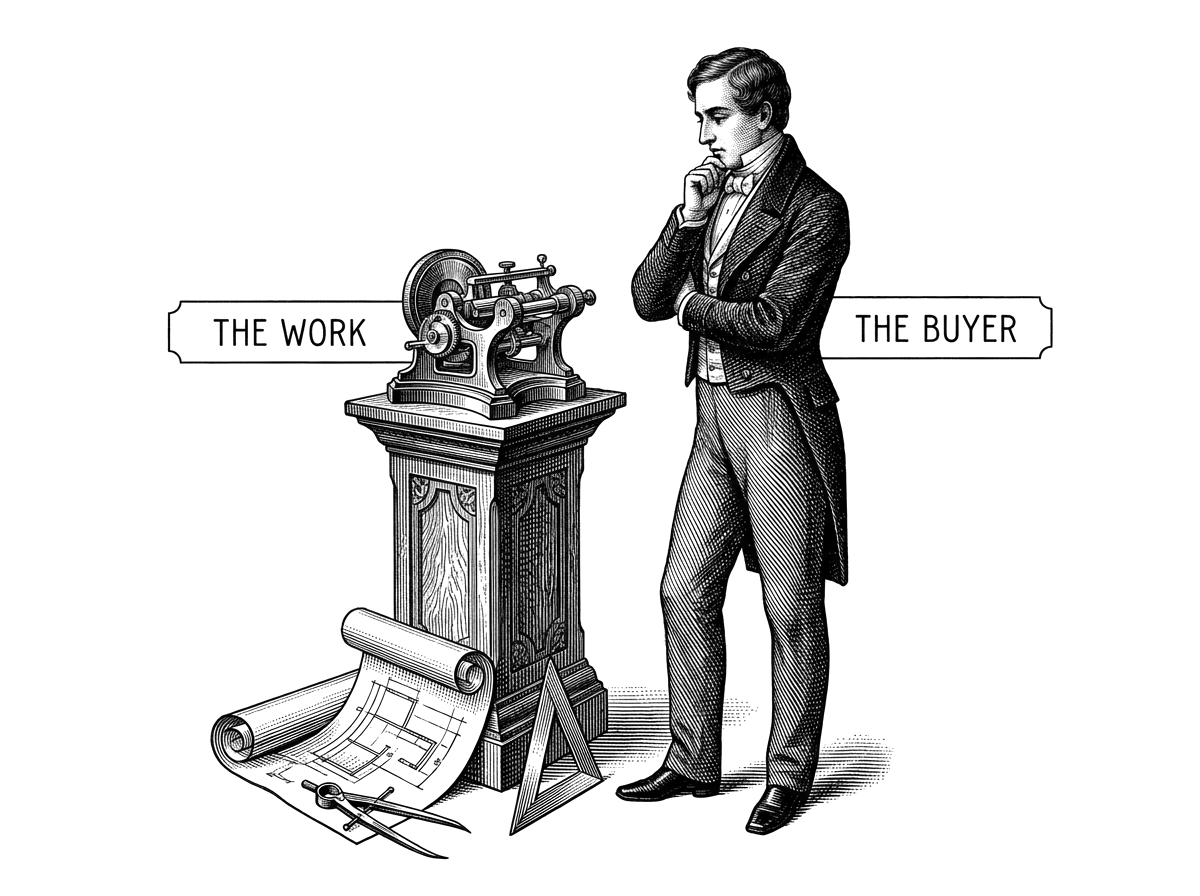
The product is the work, not the human. Employment also carries obligations and constraints that a purchase doesn't. People have bills, notice periods and unequal access to other jobs, while the company usually has more power over the terms. Someone accepting a difficult arrangement because they have few alternatives deserves an accurate account of it. Their acceptance doesn't establish that the arrangement is fair or will work well.
The business has limits too. Customers need service, work must be completed and resources are finite. A role cannot offer every condition somebody might want. We can still distinguish a necessary constraint from an old habit, and an honest limit from a promise nobody has agreed to keep.
Decide whether the job needs to exist
PDF p. 62When a team is under pressure, a request to hire can feel like a diagnosis. It is usually a proposed solution.
Start with the outcome that isn't being achieved and what is stopping it. Would changing the process remove the need for another person? Could the business reduce the work accepted, move responsibility to someone with capacity or buy limited specialist help? Waiting may be reasonable while demand remains uncertain and the cost of delay is tolerable.
These are choices to put before whoever can make them. Each has costs, including work declined or postponed and demands placed on people already there. If more capacity is necessary now, explain why. If a smaller change could settle the question, propose what to try and when to look again. Chapter 9 follows that decision through a worked hire. The purpose of the pause is to establish which work needs doing, rather than make the request for a person disappear into another process.
Ask people who already know the work
PDF p. 62A current role holder, their manager and the colleagues who depend on them may each describe a different job. Ask what makes a good day possible, what repeatedly gets in the way and what they wish someone else understood about the work. Follow broad answers into the week itself. Freedom might mean choosing how to deliver an agreed result, or deciding which result matters. Support might mean a manager available for a difficult decision, rather than more progress checks.
Jennah raised another way a role can become unworkable: a specialist is still expected to carry a full load of their own work, while managing people is added on the side. Then the organisation wonders why the management gets squeezed. A final bullet about developing the team does not create the time to do it. If the company wants the person to lead, it has to decide what that leadership involves and what room it will make for it.
That is a question about the work we offer a manager as much as the work they offer their team. The person may need to learn how to manage. They also need a job in which managing is possible. A people leader can help expose the conflict, but cannot quietly take over every neglected conversation and make the arrangement sustainable by working harder.
Jennah also asked how a role could be clear enough to guide someone while remaining flexible enough for changing priorities. My answer put responsibility on the leaders closest to the work. From an HR role, I cannot know every change taking place inside every specialist job. The manager needs to recognise those changes, discuss what they mean and keep the account of the role current. HR can help establish that habit. It cannot maintain an accurate description of work that managers keep changing without telling anyone.
Clarity does not require a promise that nothing will change. It requires us to notice when we are asking for something different. A new responsibility takes time from somewhere. A changed priority may make an earlier commitment impossible. Those consequences belong in the conversation before the old description becomes the basis for judging the person.
Resolve a disagreement through a real decision
PDF p. 64I have had room to develop these ideas at Tier 11. In the conversation with Jennah, I described a CEO who valued my contribution and gave me considerable freedom to try things. That support matters. I should not write as though every people leader has it.
You may be responsible for hiring while someone else decides the budget, the priorities and how much authority they will share. Understanding the problem does not give you control over those decisions. It can, however, give you a much better case to put before the person who has it.
Take a hypothetical agency where the founder calls a proposed coordinator independent, but the account managers say changes to delivery dates still come back to the founder. Averaging those accounts into some autonomy leaves the disagreement intact. Reconstruct one delayed job instead. Who noticed the risk? Who could move the date? Who spoke to the client? What approval was required, and who actually gave it?
The founder may be describing the organisation they intend to run. The team may be describing what happens when a deadline approaches. Neither account has to be dishonest. The difference still needs a decision.
Perhaps the founder is willing to let the delivery lead settle ordinary priorities while retaining contract and price exceptions. That would let the coordinator maintain the shared list, check dependencies and bring risks to someone who can act. The founder and delivery lead would need to agree to the arrangement. Writing it into a role description before they do would turn your proposal into a promise the candidate had no reason to doubt.
The founder may instead choose to keep those decisions. Then examine the role on those terms. A coordinator could make risks visible and bring forward options, but would depend on access to the founder for a decision. You need to establish whether that access is realistic and whether the remaining work still justifies the hire. If it does, describe the boundary honestly. Responsibility for a delay caused by an unavailable decision cannot simply be handed to the person who reported it.
If the arrangement still cannot support the required work, recommend changing the role or pausing the search, and take the unresolved choice to the person accountable for it. They may reject the recommendation. Keep the consequence specific: which result cannot reasonably be promised, which dependency remains and what the candidate would actually be accepting. You may not control whether the business hires. You remain responsible for the account of the job you give a candidate.
A written agreement is useful because people can inspect it, question it and return to it. It cannot make a founder surrender a decision or stop them taking it back. If practice departs from the agreement, the work needs another conversation and a decision from someone who can change it. A more polished document will not settle that problem.
Separate what can change from what must stay
PDF p. 66Some constraints deserve to remain. Client contact may require a shared working window. A review may protect the business from a consequential error. A limited budget puts a real boundary around the responsibilities it can buy. Designing work does not mean removing every restriction in the name of autonomy.
Other conditions are preferences we have stopped examining. A founder may want everybody in the office. They can explain why they value that, but calling it unavoidable closes a discussion about whether it helps the outcome. Your role may be to bring evidence and alternatives to that discussion, while the final choice remains theirs.
Changes have costs even when they add no salary. Clearer authority requires time from the delivery lead and a willingness to stop solving every problem through the founder. Better handovers take time from account managers. Someone must agree to supply that effort. A candidate's enthusiasm cannot stand in for it.
If the company cannot provide essential support, the job may need to be smaller, more senior or postponed. Choosing among those options can be uncomfortable. Leaving the choice unresolved passes the difficulty to a new person, who may discover it only after turning down other work to join you.
Make the offer of work specific
PDF p. 66For our hypothetical coordinator, bringing order to busy client work may be an appealing responsibility. The same job can involve repeated follow-up on other people's commitments while final decisions remain elsewhere. Someone may enjoy making dependencies clear and dislike the chasing, or welcome contributing without owning every commercial decision. Those are things to discuss alongside what they can do.
A candidate may propose a better reporting rhythm or identify a skill they could learn with support. The suggestion may be worth taking back to the manager. It becomes part of the offer only when the people who must deliver it have agreed. The hiring conversation should not create a second version of the job that the future manager will discover after the person starts.
Put agreed conditions in the offer and handover material, alongside anything still uncertain. A promise to revisit hours is different from a commitment to change them. A possible promotion is different from an available role. The candidate needs to know which they are being offered.
Work as a product asks something difficult of an employer: to make the work worth choosing and be truthful about what it contains. A people leader can help the company see what it has built. What we cannot resolve before hiring remains part of the job someone else will have to do.