
Chapter 10
Human-led, AI-augmented
PDF page 99In this chapter
My instinct was that people would tell a human more than they would tell a machine. Hiring depends on understanding the story behind an answer, so I assumed an automated interview would leave us with less of what mattered. That instinct helped shape how I work. It is also a claim that evidence can challenge, and the evidence now does.
A 2026 working paper by Brian Jabarian and Luca Henkel studied entry-level customer-service hiring in the Philippines. Of 70,884 applications, 67,056 eligible applications were randomly assigned to a human interviewer, an AI voice interviewer, or a choice between them. Humans made the final hiring decisions. Offer rates were 8.70 per cent in the human-interview group and 9.73 per cent in the AI-interview group. One-month employment was 4.98 per cent and 5.89 per cent of all applications in those two groups, respectively. The often-reported 18 per cent increase concerns that whole application pool, not retention among people hired. The researchers also found that AI interviews gathered more hiring-relevant information while remaining responsive to applicants.1
That is evidence against a blanket claim that a machine-led conversation must be thin. It comes from one hiring setting, with human decisions and follow-up reaching four months. It does not establish that an automated system can replace the discovery required for every role in this book. It does mean I should stop treating the opposite as settled.
My position is discovery-led, human-led, AI-augmented. Discovery establishes what we need to learn. A named human owns the decision and its consequences. AI helps with the work where we have reason to trust it, under checks that match the cost of an error. This is an operating policy, not a prediction that machines will always be worse at understanding people.
For the person responsible for hiring, the useful questions are which tasks a tool can handle, how mistakes become visible and who can act on them.
Start with the decision you are making
PDF p. 100Chapter 2 described the pressure created when application tools and screening tools respond to each other. A faster filter may help with volume. It cannot tell you whether the requirements you gave it describe the job you should be hiring for.
Before automating a step, name the decision it supports. Finding profiles, checking an essential requirement and choosing between two finalists are different tasks. They need different evidence and different checks. A missed meeting invitation is inconvenient. A summary that removes a candidate's qualification can exclude someone before anybody speaks to them.
Even a rule that looks objective contains a choice. Requiring a licence may be necessary for particular work. Requiring a familiar job title may be a poor substitute for asking whether someone has done the relevant work under another name. A location rule might describe a real on-site requirement, or an old preference nobody has reconsidered. The software can apply either rule faithfully. You still own the rule.
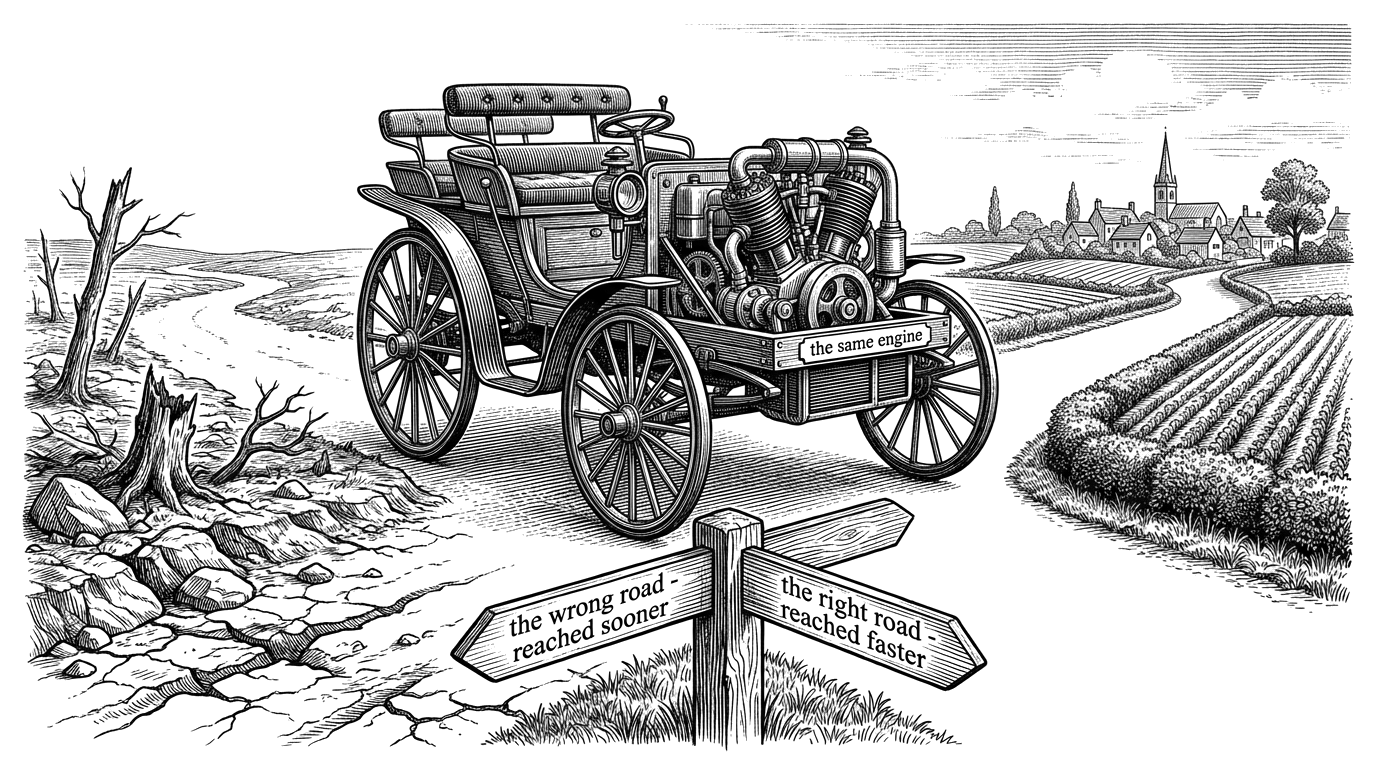
There is also a difference between missing evidence and evidence of absence. A profile that does not mention a required skill has left a question unanswered. It has not established that the person lacks the skill. Sometimes a short application question can settle it. Sometimes the available evidence is too weak to justify further assessment. Make that decision consciously, with the burden proportionate to the role and the number of people applying.
Whoever makes the choice must be able to explain it, including when they reject a machine's recommendation.
Give the tool a bounded job
PDF p. 101AI can help prepare a search, organise evidence, transcribe a conversation, compare a draft against agreed requirements and produce documents for review. These tasks can save time that would otherwise disappear into administration. The useful question is what must be checked before their output affects a person.
| Task | Useful assistance | Check before using the result |
|---|---|---|
| Research a role or candidate | Find possible sources and relevant work. | Open the sources. Check identity, dates and what the evidence actually shows. |
| Screen an essential requirement | Flag a stated mismatch or missing answer. | Confirm the requirement is necessary. Separate a clear mismatch from an unanswered question. |
| Summarise an interview | Organise statements under the agreed criteria. | Trace consequential statements to the record. Preserve uncertainty and contrary evidence. |
| Compare candidates | Put comparable evidence side by side and expose gaps. | Check omissions and apply the same criteria. Record the reason for a decision or override. |
| Draft a role document or offer material | Turn agreed facts into a readable draft. | Verify duties, authority, conditions and promises before anyone receives it. |
A tool's ability to do one of these well does not establish its ability to do the others. A good transcription service has not thereby become a valid selection test. A convincing summary may still leave out the detail that changes the hiring decision.
Consider an invented example, separate from any candidate's private interview. A candidate describes preparing client recovery plans while a delivery lead approved any promise that changed the schedule. An AI summary turns this into independent ownership of client recovery. That sounds stronger, but it has removed a limit on authority.
The reviewer checks the summary against the interview record and corrects it: the candidate prepared the plans, while the delivery lead approved changed commitments. A follow-up now has a clear purpose. What decisions could the candidate make alone, and what would they do if the person who approved the work was unavailable? The candidate may have excellent judgement. The original evidence simply had not yet answered that question.
The same correction matters when the error makes a person look weaker. If a summary says someone lacks client-facing experience because they called the people they served members rather than clients, the reviewer needs to restore the actual work before comparing them with others. Neither error should survive because the paragraph reads well.
Keep the source, the draft and the correction distinguishable. Otherwise the polished version becomes the record, and the next person cannot see what was assumed. You need enough traceability to answer a challenge without reconstructing the whole process from memory.
Check the people you never meet
PDF p. 103The easiest screening errors to notice are candidates who progress and then prove unsuitable. The harder ones are qualified people who disappear before the conversation. These are false negatives, and a process that never looks for them can become very confident in its own judgement.
Review a sample of rejected applications against the actual requirements, including cases near the screening boundary and a random selection from further below it. Do not begin by showing the reviewer the tool's verdict. Ask whether the available evidence supported exclusion, justified progression or required clarification. Compare those answers with what the tool did.
This review does not prove the rejected people would have succeeded in the job. You usually do not observe that outcome. It can reveal a narrower, actionable problem: a relevant example was overlooked, a missing answer became a negative, or a weak requirement excluded people for no useful reason. Correct the rule and check who else it affected.
A candidate also needs a practical way to correct a consequential error. Explain where AI is used, what it contributes and how a person can raise an issue. An alternative route should address a genuine access or assessment problem rather than penalise someone for having it. If the process records interviews or sends personal information to a service, understand what is collected, who can see it and how it is handled before switching it on.
That is more work than buying a tool and accepting its ranking. It is also part of using a tool that affects people's opportunities. A human screen deserves the same scrutiny. Familiar names, impressive employers and confident speech can hide a weak decision just as easily as a polished automated report.
Human ownership has to mean something
PDF p. 104Putting a human at the end of a process is not enough if that person's only job is to click approve. They need access to the underlying evidence, time to inspect it and authority to change the recommendation. They also need agreed criteria, so that changing it does not become an excuse to choose the person they liked most. If you are assigned that review without those conditions, name the missing condition to whoever owns the process. Your signature cannot stand for an examination you were unable to make.
Use the evidence-comparison approach from Chapter 9. Decide what matters before meeting the candidates. Gather comparable evidence. Record what supports each requirement, what conflicts with it and what is still unknown. If you override the assessment, write down the evidence that changed your mind. Another person should be able to follow the reason, even if they would have weighed it differently.
In my work, I prefer a human to lead the deeper conversations: questioning a founder's assumptions, testing an account of a role and discussing a difficult trade-off with a candidate. These are responsibilities I want someone to own directly. That person still needs to show that the conversation was useful, however confident they felt about it.
The question I return to is: what breaks if we are wrong? A named owner must be able to answer it for every consequential use of AI. If a mistaken summary could rule someone out, check it before exclusion. If an uncertain result could be settled with one focused question, ask it. If nobody understands why a recommendation was made, do not make it the decisive evidence.
Know what would change your mind
PDF p. 105A tool should earn a larger role through observed performance in the task you need done. Start with a bounded use and a record of the current process. Check whether it saves total time after correction, whether it loses relevant information, what candidates experience and what kinds of errors recur. Include people who withdraw or are rejected where you can, rather than collecting feedback only from successful applicants.
Follow hiring decisions into the job. Did the new person do the work the assessment was meant to predict? Were early difficulties linked to something the assessment missed, a broken promise or a later change? Keep observation dates and unknown outcomes visible. A small number of hires may help you find a specific defect, but it will not establish that a tool caused better retention.
Vendor evidence can inform this decision, but read the comparison. A gain against unstructured interviews is not automatically a gain against your structured process. A result from high-volume customer-service hiring does not settle the question for a senior role with different work and fewer observations. The relevant claim is always narrower than AI works or AI does not work.
I would change my view about a tool's role if it showed that it could gather and preserve the information we need, support sound decisions and allow errors to be corrected under our conditions. I would reduce its role if it concealed uncertainty, added candidate burden or made mistakes we could not reliably find. Those are useful conditions to write down before enthusiasm makes the decision for us.
Where this breaks: A small company may not have enough hires to compare long-term outcomes with confidence. That limits what you can claim, not whether you can inspect a transcript, test a screening rule or correct an error. Keep the initial use narrow enough to review properly. If the review costs more than the task saves, or the consequences exceed your ability to check it, that is a reason to change the use.
The benefit I want from AI is more time and better information for decisions that deserve attention. Sometimes that means doing an administrative task faster. Sometimes it means surfacing a contradiction I missed. The test is whether the process helps us understand the work and the person better, then act responsibly on what we learn.
The decision does not end when a candidate accepts. That is when we begin to see whether the work matches what we promised, and whether our assessment matches the work they do.