Podcasts

Better hiring.
A deeper conversation.

Josh joins founders and people leaders to talk about hiring, work and the teams we build.

The Book

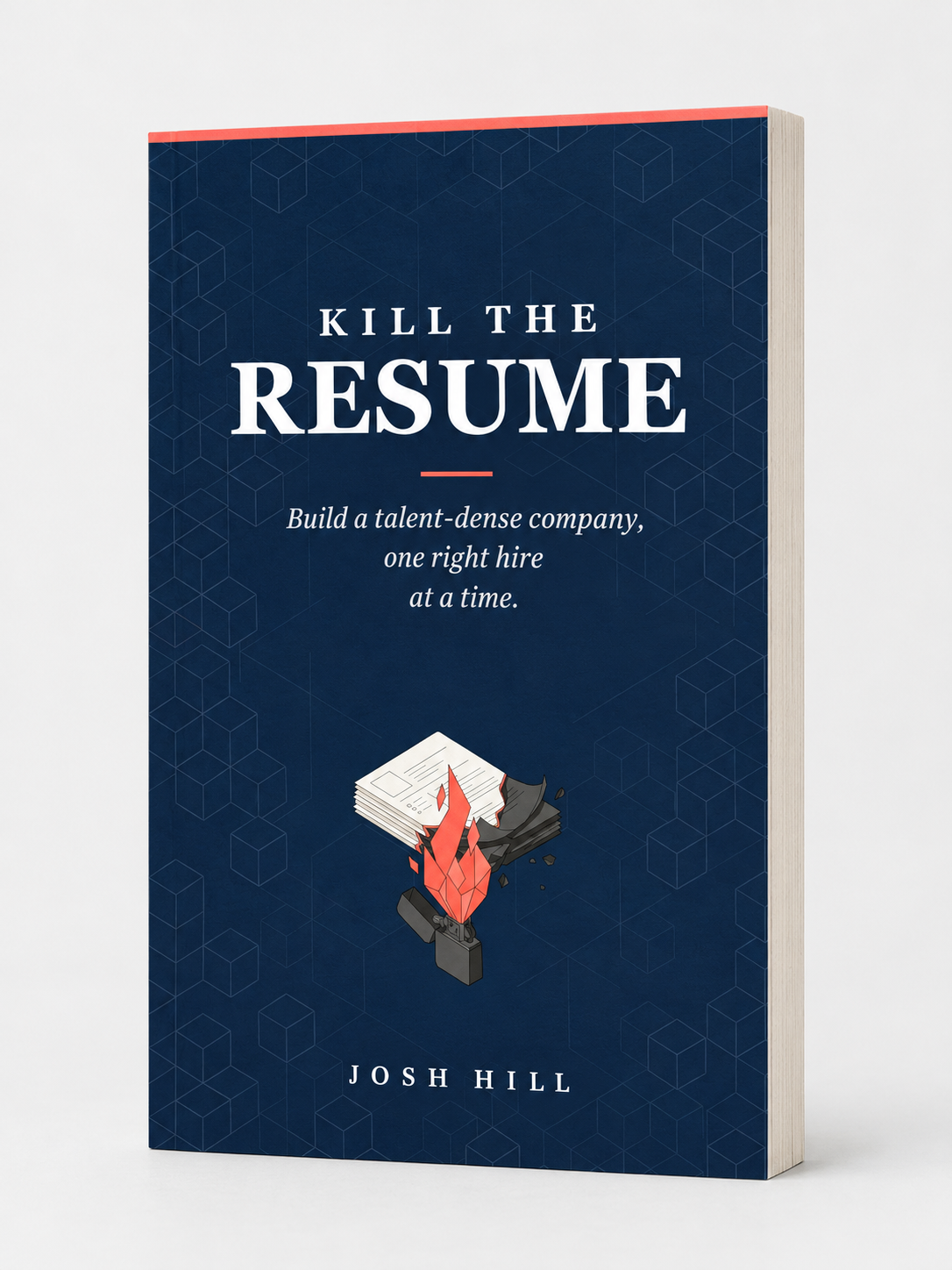
Kill the Resume by Josh Hill, shown as a printed book

By Josh Hill

Kill the
Resume.

Build a talent-dense company, one right hire at a time.

A practical guide to defining the work, finding the right people and building a stronger team. Start with the job your business needs, then find the person who can grow with it.

Read online Download the free book

PDF · 157 pages · 4.9 MB
No email. No form. Just the book.

Client Wins

The people.
The work behind the hire.

Real hiring stories.
What we did. What we learned.

Mail WavesEmail & SMS marketing agency

Mail Waves Email & SMS marketing agency

Klaviyo Specialist

Get clear on the work. Then find the person.

The brief behind the role

Mail Waves runs email and retention programmes for eCommerce brands. It needed someone who could take ownership of hands-on Klaviyo delivery.

What made this different

The original request described two similar email-marketing seats. Discovery revealed two different jobs: technical execution and client management.

The hiring process

  1. Separate the responsibilities

    We worked through the day-to-day work with the founder and gave the Klaviyo Specialist and client-success roles their own briefs.

  2. Build a task from real work

    The founder helped shape an exercise around a real account. Candidates had to work towards an outcome using the tools.

  3. Put completed work in front of the founder

    We gathered the submissions so the founder could review how candidates approached the task before the final hiring conversation.

  4. Support the offer and handover

    We coordinated the final conversation and offer. After the hire, Josh reviewed onboarding materials with the founder.

What worked

The practical task gave the founder concrete work to compare. The selected Klaviyo Specialist joined the team.

The lesson

A familiar job title can cover very different responsibilities. Separating them gives the search a clearer target.

For your next hire

Keep checking the brief as the team changes. The parallel client-success hire later withdrew, and we reopened that search under the replacement guarantee.

Mail Waves website, opens in a new tab

Mail Waves Email & SMS marketing agency

Klaviyo Specialist

A stronger brief. A clearer choice.

The brief behind the role

Mail Waves returned for another specialist search. The role called for hands-on experience and careful quality checks across client accounts.

What made this different

Candidates spotted errors in the task brief. We corrected it with the founder before the next assessment batch.

The hiring process

  1. Refine the assessment

    We updated the exercise with the client and arranged the account access and confidentiality steps candidates needed to do the work.

  2. Headhunt and speak with specialists

    We reached out to specialists, spoke with them about their experience and prepared candidate packages for the founder.

  3. Bring the work together

    Completed simulations went into the client portal, where the founder could review the submissions together.

  4. Compare the finalists

    The founder and an existing Klaviyo manager met the finalists. We added what we had learned in our own interviews about their hands-on experience and quality checks.

  5. Confirm the offer

    We coordinated the offer details. The founder confirmed acceptance and took over the employment contract.

One assessment batch

Work simulations completed
4
Invited to client interviews
3
Offer accepted
1

These figures cover one batch within the wider search.

What worked

Work samples and conversations with the team gave the founder several ways to compare the finalists before choosing.

The lesson

The quality of an assessment depends on the quality of its brief. Act on feedback before sending the next candidate through.

For your next hire

Review the task with someone who does the job, and settle the working arrangements before the final offer conversation.

Mail Waves website, opens in a new tab
VASTPerformance marketing agency

VAST Performance marketing agency

Growth Strategist

Put commercial thinking to the test.

The brief behind the role

VAST needed someone who could move between paid media and the wider business. The successful candidate came through the founder’s network, with SuperHired supporting the assessment and decision.

What made this different

The search needed a clearer balance between hands-on execution and strategy. We revisited the brief with the founder and narrowed the target.

The hiring process

  1. Sharpen the role

    We worked with the founder to define the combination of media-buying experience and commercial understanding the job required.

  2. Search and assess referrals

    Alongside targeted outreach, we helped assess a candidate from the founder’s network through the practical task.

  3. Test a real growth problem

    We revised the practical exercise so the candidate could show how they read business performance and chose what to investigate.

  4. Use the findings in the decision

    The founder reviewed the completed task, including the candidate’s analysis of margins and order value, before making the offer.

  5. Prepare the handover

    After acceptance, we prepared and delivered onboarding material for the new hire.

What worked

The task made the candidate’s commercial reasoning visible. It gave the founder evidence beyond the referral and the interview. The Growth Strategist joined the team.

The lesson

Strategy means different things in different agencies. Define the decisions the person will make and test those decisions.

For your next hire

Set the balance of execution and strategy early, and apply the same assessment standard to referrals and sourced candidates.

VAST website, opens in a new tab
EverBoostRetention marketing agency

EverBoost Retention marketing agency

Retention Strategist

Find the thinking behind the tactics.

The brief behind the role

EverBoost runs retention and lifecycle marketing for eCommerce brands. The role needed someone who could lead client strategy as well as understand the work behind it.

What made this different

The exercise needed to reveal how someone investigates a change in performance. Giving away the problem in the brief would hide that part of their thinking.

The hiring process

  1. Clarify the strategic work

    We worked with the founder to separate the role’s strategic responsibilities from routine account tasks.

  2. Refine the real-business exercise

    The founder helped correct assumptions and sharpen the assessment. Candidates had to identify the performance change and investigate its cause.

  3. Review the assignments

    The founder reviewed completed work and used it to decide who to meet for a follow-up interview.

  4. Make the choice from the evidence

    The search continued beyond the first preferred option. The founder chose an assessed candidate and the offer was accepted.

What worked

The assignment showed the selected candidate’s reasoning before the final interview, giving that conversation a clear starting point.

The lesson

Knowing the tools is only part of the job. A strategist also needs to find the right problem to solve.

For your next hire

Check that the brief leaves room for diagnosis, and keep credible options in the process until an offer is accepted.

EverBoost website, opens in a new tab
ZiriB2B website agency

Ziri B2B website agency

Web Designer

Great taste. Proven in the work.

The brief behind the role

Ziri wanted a designer who could take ownership of website design while the founder focused on growing the studio.

What made this different

Taste can be hard to describe. Portfolios opened the conversation, but the founder needed to see the person’s own decisions and working pace.

The hiring process

  1. Make the design standard clear

    The founder shared detailed examples of the hierarchy, typography, spacing and finish he valued. Those examples helped refine the brief.

  2. Bring the founder in earlier

    We moved the first founder conversation ahead of the exercise and sharpened the focus on design quality and speed.

  3. Review a practical redesign

    Candidates redesigned a page. The founder reviewed the submitted work and explored how they approached the choices.

  4. Check both sides of the match

    Conversations covered the studio’s pace and the creative work the candidate wanted. The founder compared the finalists before agreeing the offer.

The final decision

Finalists considered
3

The group compared before the offer.

What worked

A strong redesign made craft and pace visible. The conversations also showed whether the work itself appealed to the person. The selected designer joined the team.

The lesson

Turn subjective taste into examples people can discuss. Then assess the candidate’s own work against that standard.

For your next hire

Agree the design examples early, and use the first conversation to check expectations before asking for practical work.

Ziri website, opens in a new tab
BabyEmChildcare training provider

BabyEm Childcare training provider

Operations Manager

A clear owner for the day-to-day.

The brief behind the role

BabyEm provides childcare training. The founder wanted an Operations Manager who could organise the work and help the team operate together.

What made this different

Skills alone would not settle the choice. The founder needed to understand how someone would take ownership and work with the team.

The hiring process

  1. Understand the business

    An in-depth conversation and questionnaire explored the organisation, the founder’s priorities, values and ways of working.

  2. Find and prepare the shortlist

    We used the discovery to guide the search, then organised the candidate information so the founder could see how each person matched the work.

  3. See the work before the interview

    Practical tasks and candidate information gave the founder evidence to review before the final conversation.

  4. Explore how they would work together

    With the work already visible, the interview could go deeper into values, working style and the fit with the team.

What worked

In her follow-up feedback, the founder described the Operations Manager bringing the team together, organising systems and taking work off her plate.

The lesson

Great preparation changes the final interview. The conversation can focus on working together because practical ability is already visible.

For your next hire

Make interview guidance and onboarding support easier to use. The founder’s feedback showed that deciding who to hire is only one part of making the hire work.

BabyEm website, opens in a new tab
Luck & CoEmail & SMS marketing agency

Luck & Co Email & SMS marketing agency

CRM Strategist

Test the work that decides the hire.

The brief behind the role

Luck & Co needed someone who could lead strategy across client accounts. Reading performance and explaining the next step were central to the role.

What made this different

The first assessment did not test the analytics and reporting work deeply enough. That requirement was already in the brief, so the exercise needed to change.

The hiring process

  1. Find and review CRM specialists

    We contacted specialists and progressed candidates to client review against the role brief.

  2. See the work and meet the finalists

    Candidates completed live work exercises and client interviews. The first round reached an offer, but no offer was signed.

  3. Review what the exercise missed

    We reviewed the search and identified the gap between what the role required and what the assessment had shown.

  4. Test analytics earlier

    The next round used a client-supplied analytics exercise in the recruiter conversation, before candidates progressed further.

The first search

People contacted
133
Reached client review or beyond
13
Work simulations completed
6
Reached client interview
4
Offer made
1
Offers signed
0

Recruiting partner’s report. This round ended without a signed offer. The relaunched search is separate.

What worked

The revised exercise brought the client’s reporting work into the early conversations. The search continues, with no completed hire to report.

The lesson

A requirement in a brief is not enough. The assessment needs to show whether someone can do that part of the job.

For your next hire

Check every deciding skill against the exercise before the search starts, and keep several credible options in play until an offer is signed.

Luck & Co website, opens in a new tab
US VisionMed PartnersMedical optometry group

US VisionMed Partners Medical optometry group

HR Generalist

Stay close to the work. Keep refining the match.

The brief behind the role

US VisionMed Partners needed an HR Generalist who could support people across practices while building useful systems.

What made this different

The role called for both day-to-day people support and the judgement to build processes across different teams.

The hiring process

  1. Define the practical role

    We developed the brief around hands-on HR experience, sound judgement and the ability to build systems while supporting the team.

  2. Bring candidates into the conversation

    Candidates progressed to client interviews, giving the client direct conversations about their experience and the work ahead.

  3. Review the next options

    After client feedback, we reviewed the remaining options, including another candidate and reopening the search.

What worked

Client interviews gave us feedback on the match and a basis for deciding whether to revisit a candidate or reopen the search. A completed hire has not yet been confirmed.

The lesson

An interview is a step towards a match. Keep the outcome open until both sides have agreed to move forward.

For your next hire

Agree who makes the final decision and what evidence they need, then use each interview to sharpen the next step.

US VisionMed Partners website, opens in a new tab
Inside the hire

Your next hire.
Let’s make it count.

Talk about your next hire
The conversation