
Chapter 5
What is work, really?
PDF page 53In this chapter
When a brilliant player struggles after changing teams, we look at what the new team asks of them as well as how they play.
I've watched skilled people struggle in work that looked close to something they'd done well before. I've also watched people deliver more than we expected once they had the support and authority the work needed. Before calling someone a bad hire, I want to understand what happened around them.
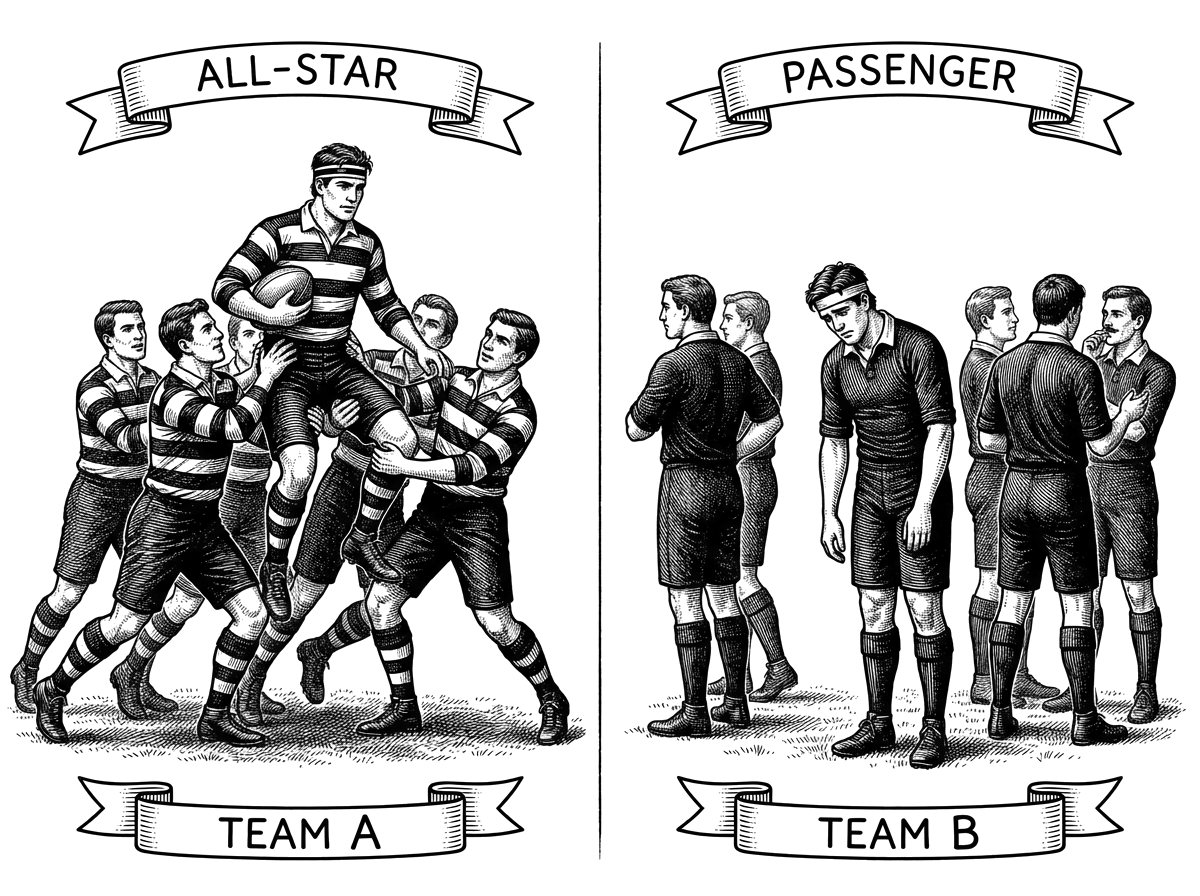
The definition I use is work is human energy applied in a context. A person brings effort, judgement and attention, then uses them under particular conditions. A list of duties tells us little about those conditions. If we're going to say they matter, we need to describe them clearly enough to do something about them.
Describe what happens around the task
PDF p. 54Consider two illustrative marketing roles. Both managers plan campaigns, work with designers and report on results. In one company, the manager can approve a small experiment and change it the next day. The designer sits alongside them, the budget is available and a failed test is an accepted cost of learning. In the other, the manager works in a regulated market. Claims need review, several teams share the designer and a change can affect work already approved for release.
The first manager must judge when the evidence is good enough to try something. The second must also know which decisions need review and how to keep work moving through it. Both need care and sound judgement, but the consequences of a mistake and the appropriate pace differ.
Describing the second company as “slow” would miss what its review process protects. Calling the first “entrepreneurial” would leave a candidate guessing what freedom they would actually have. Context becomes useful when you can name who decides, what support exists, how mistakes are handled and where the work depends on someone else.
Ask the same questions when you look backwards. A result on a resume may reflect considerable skill, a strong team, an established customer base, or systems the candidate won't have in your business. You need to understand what the person contributed, what others contributed and what they would need to produce a similar result here.
Four ways to look at the work
PDF p. 55I use four headings to organise that description:
| Part | What to investigate |
|---|---|
| Human Energy | The effort, attention and judgement the work requires, and what helps a person sustain them. |
| Context | The tools, resources, relationships and decision rights around the work. |
| Behaviours | The observable actions that help someone deliver in these conditions. |
| Alignment | Whether those actions serve the business outcome and whether the work offers something the person values. |
The headings overlap. They organise an investigation rather than calculate a prediction. What a person knows and chooses matters alongside what the setting allows.
Alignment runs in two directions. The company needs useful work, and the person needs the job to be worth doing. A role can deliver a business result while exhausting the person in it. Enjoyable work can also stop serving a useful business purpose. Both belong in the description before you decide whether the role should continue in its current form.
Gino Wickman's phrase, the right person in the right seat, points towards this relationship.1 To use it, you still have to find out what the seat contains and gather evidence about the person.
Describe the outcome
PDF p. 56The outcome gives the tasks their purpose. For the regulated marketing role, publishing more campaigns is not sufficient. They must meet the relevant requirements and reach the intended audience. For the faster team, running more tests achieves little if nobody learns from them.
Some useful work prevents trouble rather than producing something immediately visible. It can happen in a conversation you weren't in. Checking a risky claim, maintaining a relationship or helping a colleague understand a difficult problem can matter even when no new document appears at the end of the day. A description focused only on volume may encourage people to skip exactly that work. Hours worked cannot settle the question either. You need to distinguish useful effort from time spent overcoming avoidable obstacles.
What the person wants the work to do
PDF p. 56Clayton Christensen's work on Jobs To Be Done asks us to look at the progress someone seeks when they choose a product.2 Bob Moesta helped develop this way of investigating customer choices, and later applied it to career moves with Ethan Bernstein and Michael Horn in Job Moves.34 I draw on these ideas to understand what people want their work to make possible.
A hammer helps you hang the picture you want on your wall. What is this person hoping the job will make possible?
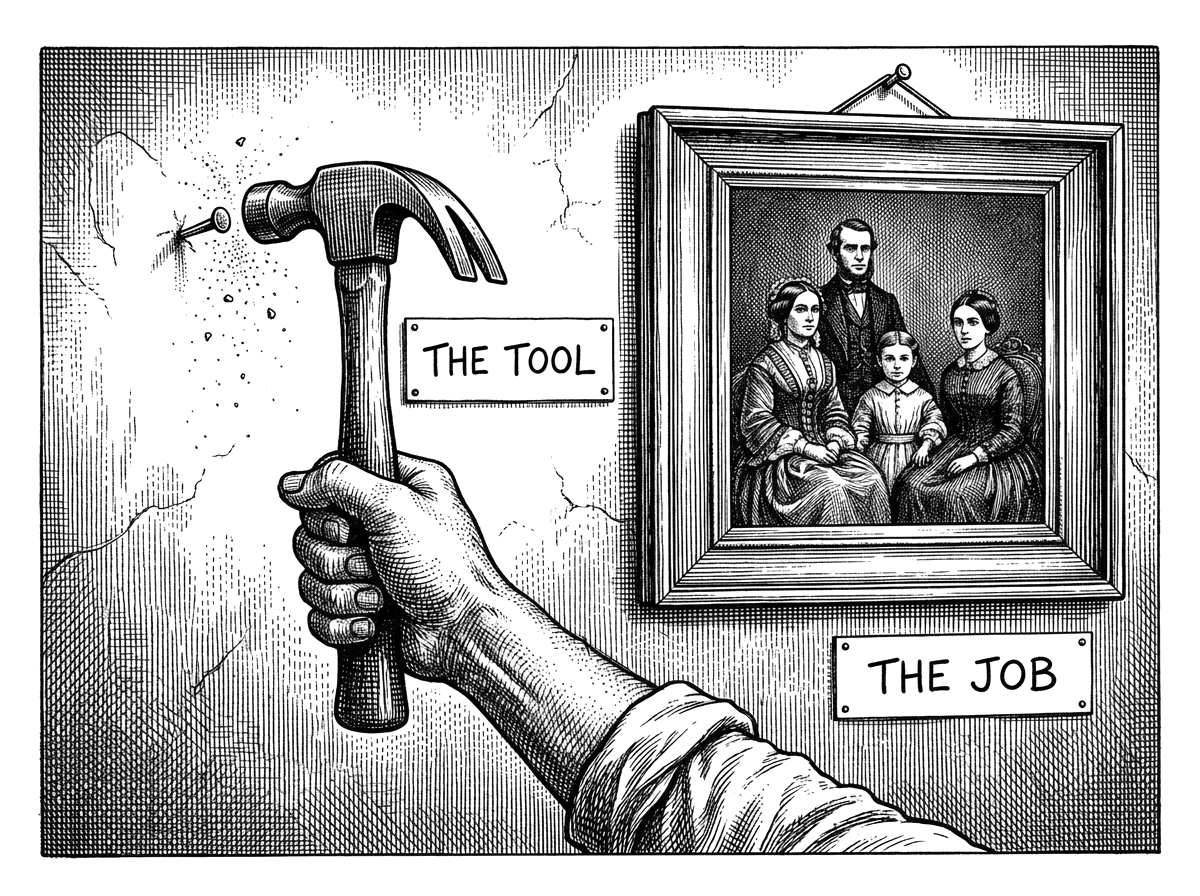
The answer might be reliable pay, room to become better at a craft, work that matters to them or a week they can plan around. Several can matter at once, and their importance may change with the person's circumstances. That doesn't make them less committed to doing good work.
In conversations about work, I ask what people want more of and what they want less of. A title doesn't tell me either. Two people considering the same management role may want quite different things from it. One wants to develop other people. Another wants more say over decisions they already help deliver. Both might be capable managers, but the role needs to offer the responsibility each thinks they are accepting.
More responsibility isn't necessarily a substitute for predictable hours. A friendly team doesn't settle a pay gap. Before assuming that the attractive parts of your job outweigh its difficulties, find out which parts matter to the person considering it.
You don't need to investigate their private life to do that. If a candidate needs predictable finishing times, ask what schedule they can commit to and whether the role can provide it. They don't owe you a personal justification.
Put the description on paper
PDF p. 58A job description can contain all of this. The problem is the information we leave out, not the name at the top of the document. A reader should be able to imagine making a real decision in the role and understand what support would be available.
For the illustrative marketing role, “own campaign delivery” is a start. A useful description would explain how the person turns an agreed campaign objective into a plan, coordinates the designer and obtains approvals before launch. It would name who approves claims, who can change the budget, what happens when those people disagree and which parts of the process the new manager can change.
The description records what you currently understand, including its limits. Before filling the role, you have to decide which conditions to keep, which to change and whether another hire is needed at all. Dart Lindsley's view of work as a product helps us make those choices.5