Every week another headline tells me AI has broken hiring. The resume was written by a model. The candidate on the call has a second screen feeding them answers. The screening step we trusted for years has gone quiet. So the panic arrives right on cue, and it always takes the same shape: lock it down, add a detector, ban the tool, catch the cheats.
I understand the instinct.
Two researchers, Shraddha Sunil and Mudit Saraf, made the case in Harvard Business Review this month, and one line of theirs stuck with me.
Performing well in an interview is becoming infinitely scalable and practically free.
When a strong application costs almost nothing to produce, it stops telling you anything about the person who sent it.
Hiring’s signals were weak long before AI
All that lockdown energy treats the candidate’s AI as the problem. The real problem is older than AI, and harder to say out loud. We were never measuring the work. We were measuring the things that sit near the work and trusting them to stand in for it.
Look at what we actually leaned on. A resume is a guess about a person, written by that person, and checked by nobody. An interview tells you who is good at interviews, which is a real talent and almost never the one you’re paying for. A take-home you grade after the fact tells you a tidy document showed up, and nothing about who built it, or how, or what they would do when the brief moved on them. Those were thin signals a decade ago. AI didn’t break them. It walked through a door we had held open for years and switched on the light.
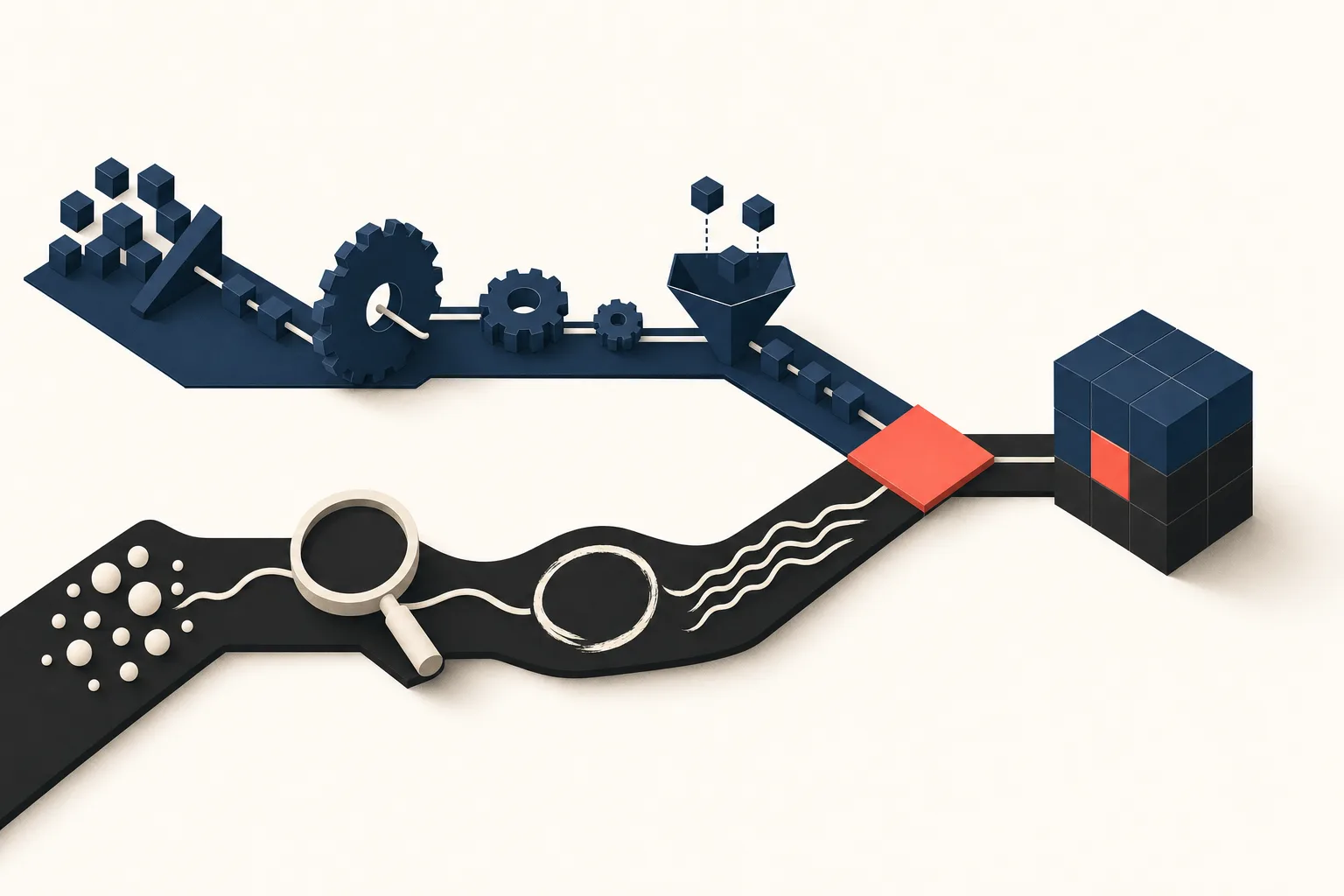
And there’s a machine running underneath all of it that nobody sat down and designed. The tracking software reads for keywords, so people write for keywords. A recruiter bolts on an AI filter, so the candidate bolts on an assistant to beat it. Round and round it goes, each side automating against the other, and every loop drags the whole thing further from the only question that matters: can this person do the job. Nobody here is cheating a fair game. The game was built to reward gaming, and we are the ones who built it.
Stop policing the tool. Watch the work.
The fix is almost boring once you see it. You stop guarding the tool, and you watch the work itself.
We call our version a Work Simulation, and it runs in two parts. First the candidate does a real piece of the job, in the real tools, with AI and whatever else they would normally reach for. Then we sit with them in a live, screen-shared session and lean on that work: a curveball, a follow-up, a decision they have to defend out loud while we move the brief under them. The live half is the half nobody can fake, and that is the whole point of running it. A model will happily write the answer. It won’t hold the answer up when the ground shifts and you ask the person in the chair to explain why they did what they did.
Letting AI into the room turns out to be the useful part, not the dangerous one. When the work is in front of you, the way someone uses the tool becomes its own signal.
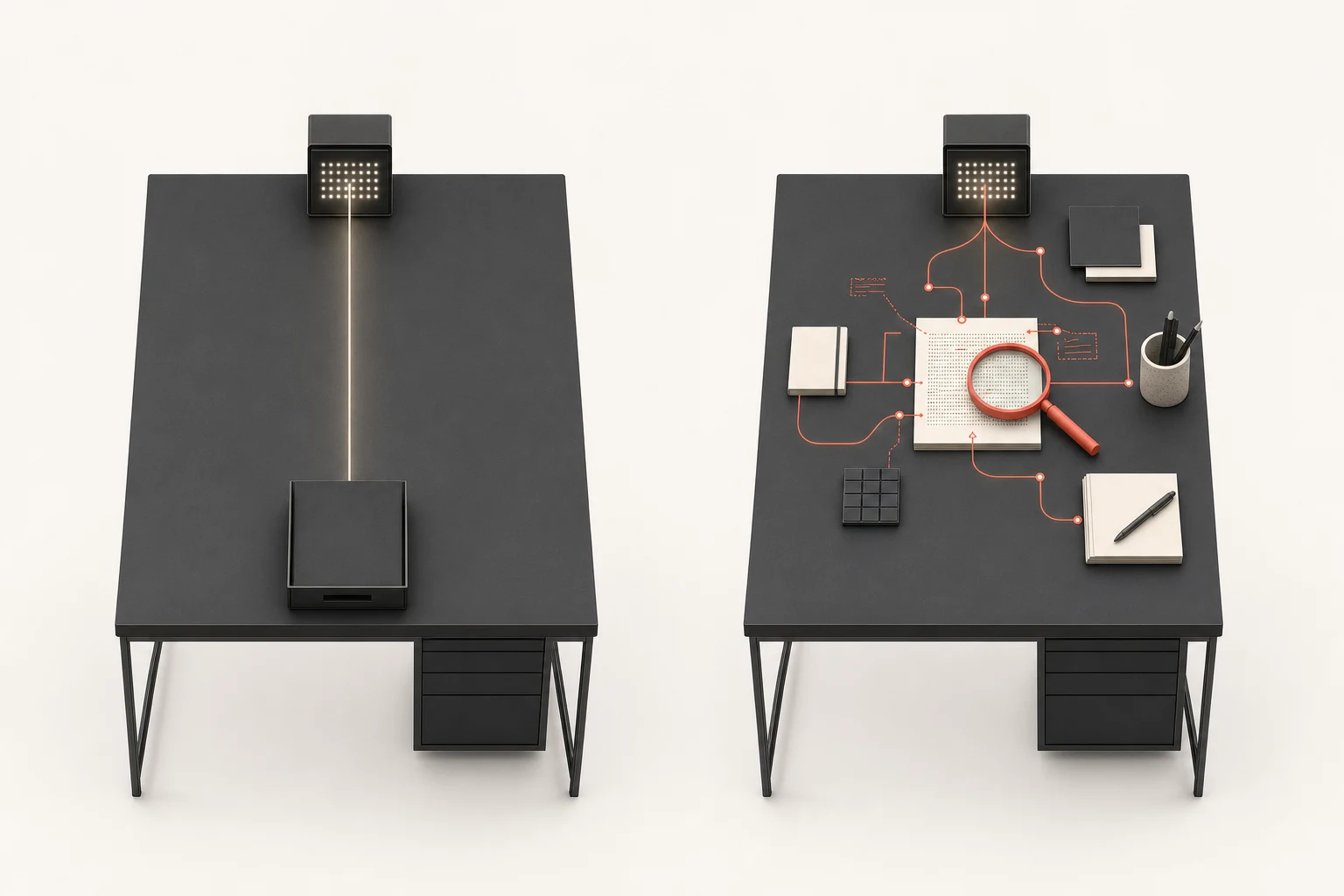
The screen you can't see (graded after the fact)
- A resume, checked by no one
- A rehearsed interview answer
- A take-home you never watched
- A keyword match in a system
- A credential earned out of sight
The Work Simulation (watched, in real time)
- The real work of the job
- Watched live, every tool allowed
- How they think, not how they present
- Judged against what the seat needs
- Evidence you saw with your own eyes
What a candidate’s AI use tells you
Once AI is allowed and the work is visible, how a candidate uses it becomes one of the most useful things you learn all day.
So watch the specifics. Did they read and pressure-test what the model gave them, or paste it through untouched? When you changed the brief, could they explain why their approach still held together? Do they know the one part of the task where the tool was the wrong move, and reach for their own judgment instead? You can watch all of that happen, and it tells you fast whether someone thinks with the tool or hides behind it.
That isn’t cheating to be caught. That is the job. Most of these people will use AI every day once they’re hired, so watching someone use it well, in the real context, tells you more than any rule that pretends they won’t.
We map the real job before we test anyone
A Work Simulation only works if it’s built for the actual seat. A generic case study can be gamed. The real work of your role, under your constraints, can’t.
So the real work happens before the candidate ever shows up, and it’s the part nobody enjoys. We pull the job apart and write down what it actually is, in a Job Map. Not a job description, which is mostly a wish list. The real thing: what this person will own, the work that fills their week, what good looks like by month three. Then we work out who tends to thrive in a seat like that, scored across the 32 Work Drivers, the functional, social, and emotional things people actually need from their work. We hold the seat up against those drivers, and we hold every candidate up against them too.
By the time anyone sits down to a simulation, the task in front of them comes straight from the Job Map, and what we judge them on comes from the profile of who actually fits. We already know the job and we already know the person. The session is there to confirm it, not to discover it cold. And when the client sits down with the finalist at the end, they aren’t interviewing a stranger off a resume. They’re talking to someone whose work they have already watched.
Where this breaks
I should be honest about the edges, because every method has them. This is not a screen for the top of a funnel. You can’t sit and watch five hundred applicants, and you shouldn’t try. A simulation runs at the end, on the few people who have already come through sourcing and a first review. It also needs a real task to build from, so a role that is still vague on paper has to be defined before any of this works, and that definition is its own honest piece of effort.
A determined faker can still bring help to the live call. The difference is that the help stops working the moment you change the brief, because a borrowed answer can’t adapt and the person who actually did the thinking can. Watching the work doesn’t make deception impossible. It makes deception pointless, which is the next best thing, and a far better bet than an arms race you will lose.
We believe a hire is a person doing real work in a real place, not a document that slipped past a filter. We reject the idea that you can detect your way to a good hire, because every detector just teaches the next candidate how to dress better. So do this on your next role: take the test you would hand a finalist, and ask one plain question of it. Could you sit beside them and watch them do it? If the answer is no, that is the test to throw out. Watch what happens when you stop guarding the tool and start watching the work. The people who were always going to be good at the job start to look obvious, and the ones who were only ever good at the test quietly stop mattering.