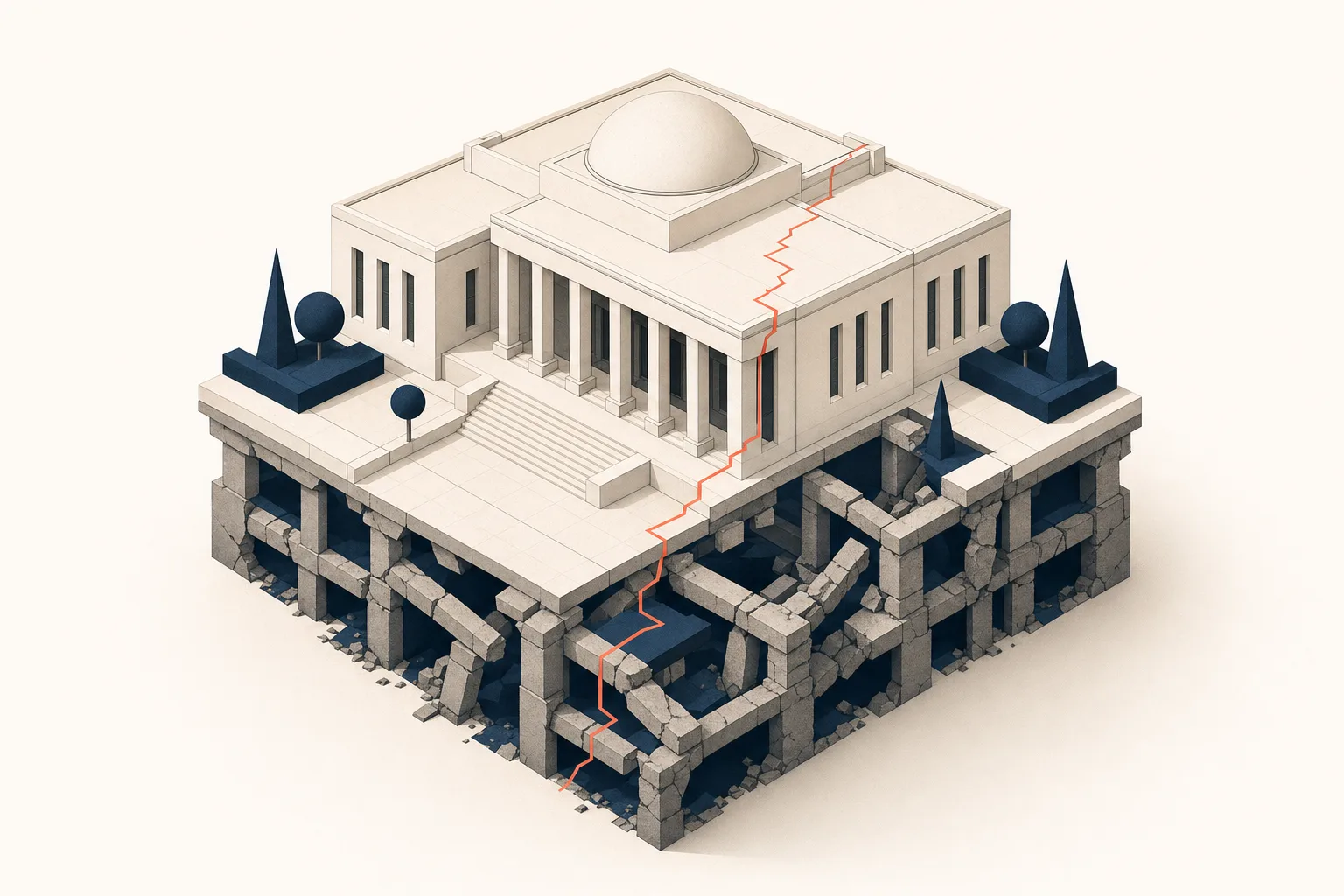
Traditional interviews predict just 14% of actual job performance. That finding comes from Schmidt and Hunter’s landmark 1998 meta-analysis in Psychological Bulletin, covering 85 years of research across thousands of studies. Fourteen percent. You make better predictions buying a used car.
And yet interviews remain the primary tool for six-figure hiring decisions at most companies. The candidate performs confidence. You perform culture. Both sides rehearse answers to predictable questions. The person who wins is the person who performs best, not the person who works best.
This is the $240,000 question most founders only ask after the fact: why did the person who interviewed so well turn out so wrong?
Both Sides Are Acting
Interviews are theater. The candidate prepares stories that demonstrate competence. You prepare questions that signal rigor. Everyone follows the script. The decision gets made based on 3 hours of rehearsed performance that have almost nothing to do with actual work.
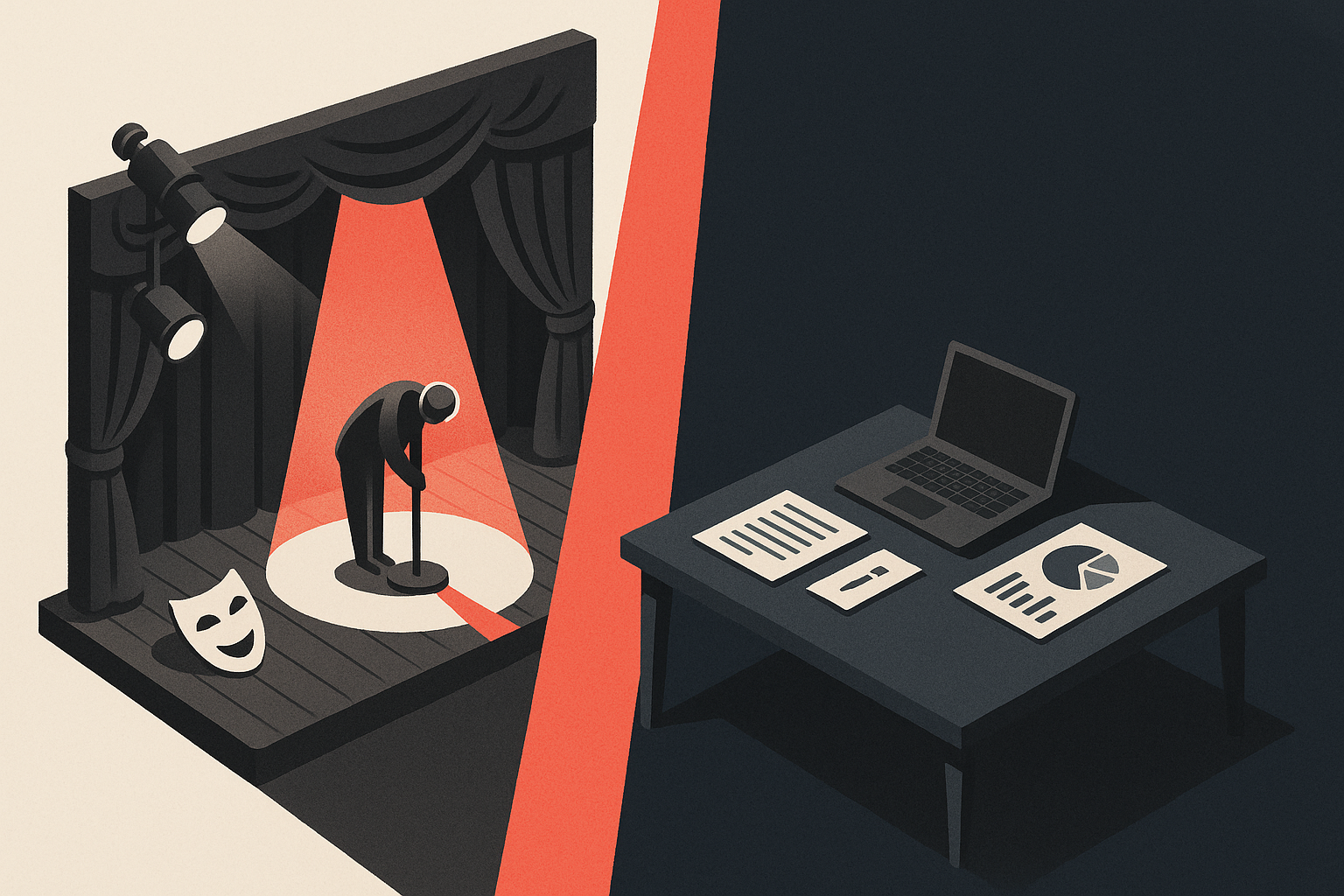
The problem compounds because some people are genuinely gifted performers. They know what you want to hear. They project confidence at the right moments.
Meanwhile, the analytical thinker, the deep problem-solver, the quiet expert who makes everyone around them better: they come across as awkward. They pause before answering because they’re actually thinking, not rehearsing. They give honest answers instead of polished ones.
Traditional hiring systematically selects for performance skill and filters out work skill.
The research on affinity bias confirms it: interviewers are significantly more likely to hire candidates who remind them of themselves. Combine that with a bias toward confident speakers and you get homogeneous teams, groupthink, and a pattern of missing the people your competitors are also missing.

The diamonds you keep missing: brilliant introverts who do deep work. Lateral thinkers who don’t fit templates. People from non-traditional backgrounds bringing fresh perspectives. Those who communicate better through work than words.
When you do accidentally hire one of these people, you often don’t realize you got lucky. You succeeded despite your process, not because of it.
What Bad Hires Actually Cost
The financial cost of a bad hire averages $240,000 when you include salary paid, lost productivity, team disruption, and replacement costs. For a company doing $2M in annual revenue, that’s 12% of your entire year.
But the real cost isn’t financial. It’s human.
The pattern plays out in every bad hire:
Week 1: Optimism. “They seem great.”
Month 1: Doubt. “Are we not supporting them well enough?”
Month 3: Frustration. Projects take longer. Other people carry the weight.
Month 6: Your best performer gives notice. She says she “found a better opportunity.” The truth is she’s tired of carrying dead weight.

Bad hires don’t just fail. They make good people quit. They normalize mediocrity. They consume management energy that should go toward leading, not managing problems.
For every bad hire, you risk losing one to two good employees. That’s not a hiring problem. That’s an existential threat.
It’s Not Wrong People. It’s Wrong Process.
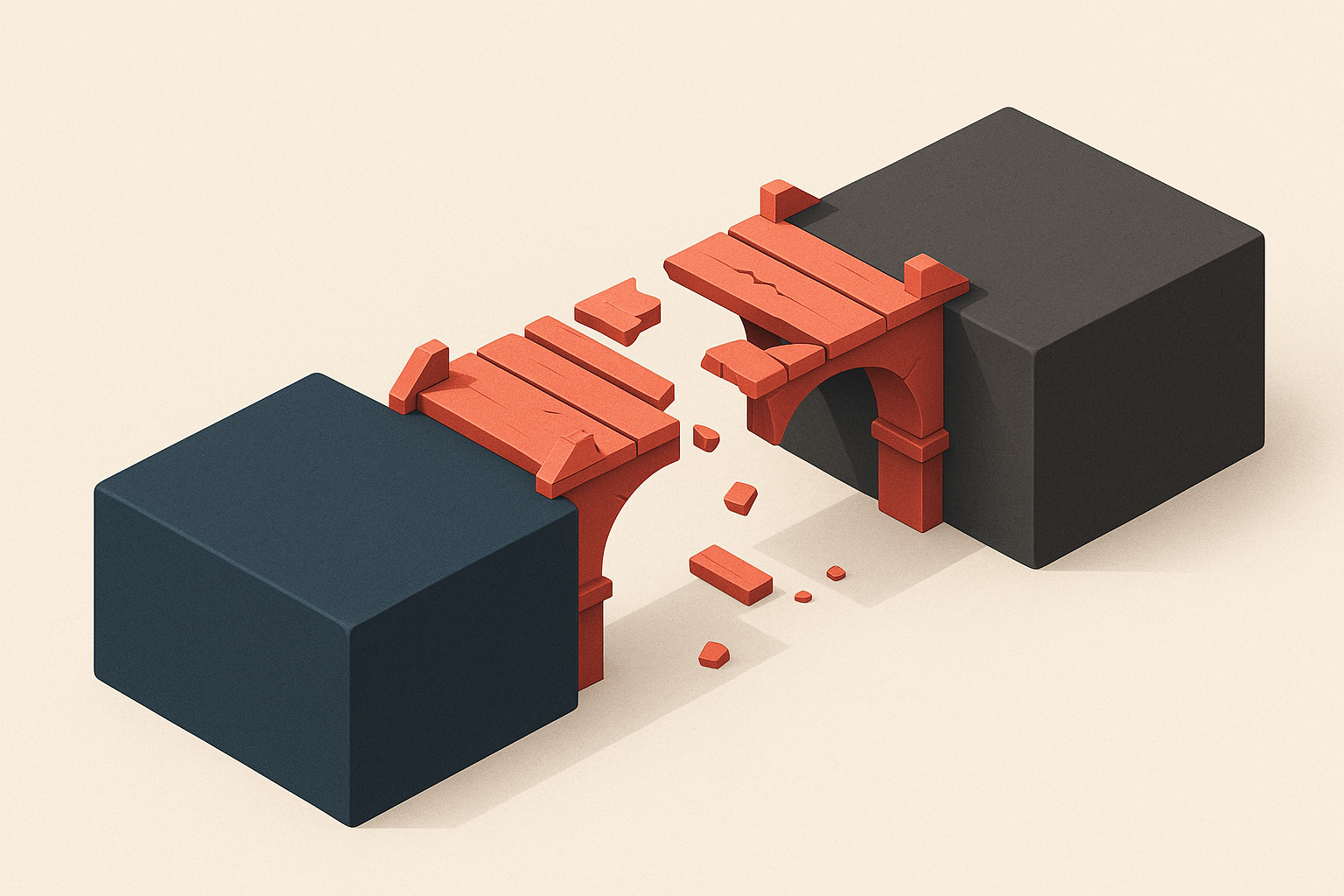
There’s no such thing as a wrong person. There are only wrong matches.
Ninety-five percent of people want to do good work. They want to contribute value. They want to be part of a team that respects their effort.
When someone “fails,” it’s almost never because they’re a bad person. It’s because the matching process was bad.
Three questions about your last bad hire:
- Did you define the role beyond a task list?
- Did you assess for anything beyond skills and charm?
- Did you create conditions for that specific person to succeed?
Usually the answer is no across the board. The “bad hire” wasn’t bad. The process was.
This is what discovery-led hiring addresses. Not better interviewing. Better matching.
What Discovery-Led Hiring Changes
Discovery-led hiring inverts the traditional equation. Instead of spending 5 hours defining a role and 500 hours managing the wrong person, you spend the time upfront to understand what you actually need.
The framework operates on both sides.
On the company side, discovery produces a Right Person Profile. Not a job description. A profile that maps the 32 Work Drivers predicting success in this specific role: functional drivers (what they do), social drivers (how they collaborate), and emotional drivers (what motivates them).
The profile identifies team dynamics, success patterns at 30, 60, and 90 days, and the specific behaviors that have made your best people better.
On the candidate side, discovery answers a different question entirely: what is this person hiring their work to do?
Not “do they want a job.” What do they want from work? What environment makes them thrive? What would make them quit in the first 90 days?
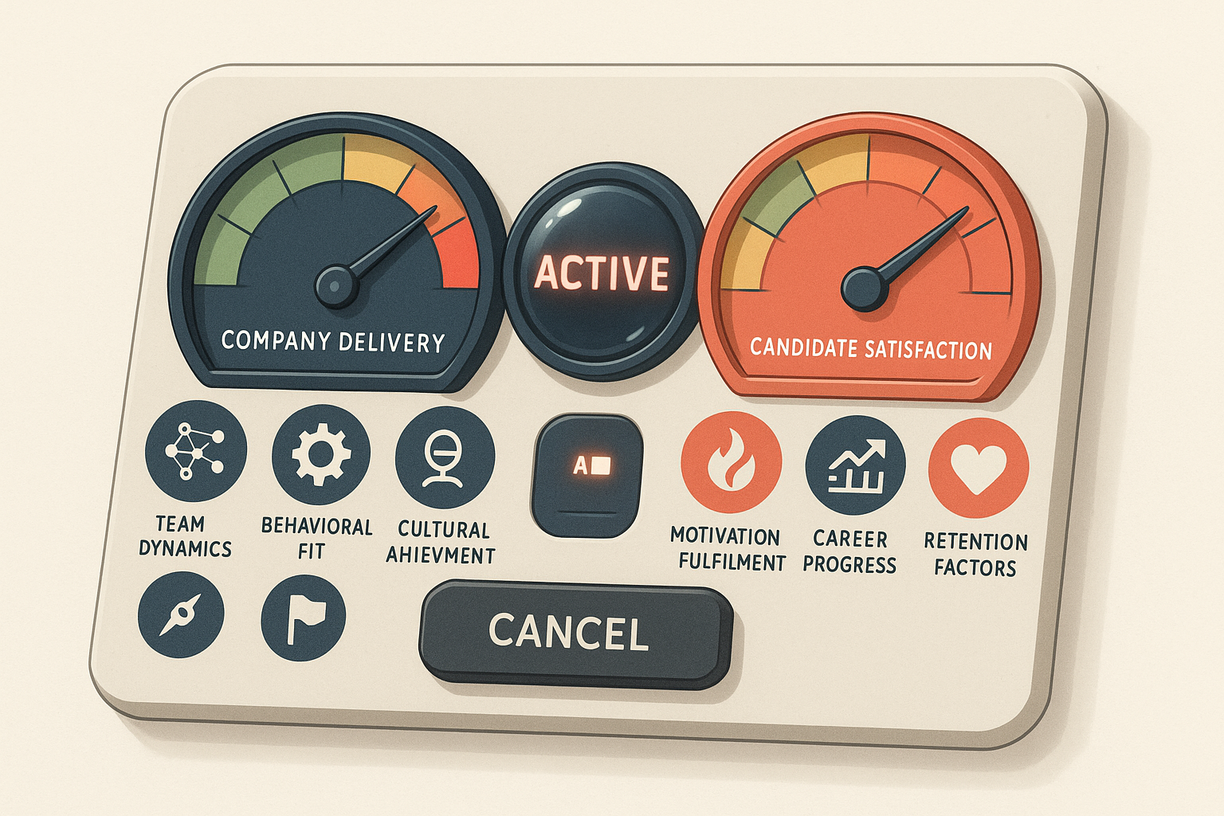
Think of employees as subscribers to your work product. If the work doesn’t deliver what they subscribed for, they cancel. You wouldn’t market a product without understanding your customer. Discovery-led hiring applies the same logic to hiring.
Traditional hiring asks: “Can you do the job?”
Discovery-led hiring asks: “Will you thrive here? Will you make others better? And will this role deliver what you need from work?”
Proving Capability, Not Performing It
Discovery creates alignment. But alignment isn’t proof.
Someone still needs to demonstrate they can do the work. That’s where Work Simulations come in.
Work Simulations are not generic assessments. They are bespoke challenges built from actual problems the company is facing right now. Engineers debug real code. Marketers analyze real campaign data. Analysts work with real numbers to solve real problems.
Candidates get paid for this work. Every simulation is compensated because real work deserves real compensation.
Both sides learn something interviews can never reveal.
What you learn: how they think, how they communicate decisions, how they handle ambiguity, whether their approach meshes with your team’s.
What they learn: what the actual work feels like, whether they enjoy it, whether the complexity and expectations match what they were told. No surprises on day one.
Work sample tests predict job performance three times better than unstructured interviews (Schmidt & Hunter, 1998, Psychological Bulletin). Discovery-led hiring treats that research as foundational, not optional.
What This Looks Like in Practice
The discovery-led process is nine structured phases.
The first phase: You spend three hours total in discovery conversations. SuperHired maps 32 Work Drivers, builds the Right Person Profile, and delivers a Discovery Brief that defines the role with more precision than most companies achieve in a year of trial and error.
The search phase: SuperHired’s AI searches across platforms you’d never manually check. Humans assess every potential match in full context. You review shortlisted candidates who have already been evaluated against your specific Work Drivers.
The simulation phase: Finalists complete paid Work Simulations built from your actual challenges. You watch people do the work before you hire them.
The final phase: You sit down with three to five people you didn’t know existed. Each comes with a 29-page Job Map covering Work Driver alignment, simulation results, compensation expectations, and mutual fit assessment.
The results: 90% of placements still thriving at 18 months. Every placement comes with a 120-day guarantee, double the industry standard. Flat fees starting at $7,500, not the 20-35% of salary traditional agencies charge.
You make the decision with confidence based on evidence, not hope.
Three Things You Can Change This Week
You don’t need to hire a firm to start fixing your process. These three changes address the biggest failure modes.
First, replace your job description with a Work Driver profile. Before your next hire, answer: What does success look like at 30, 60, and 90 days? Who will they work with daily? What specific behaviors make someone successful in this seat? What would cause someone to fail despite having the right skills? Map the work, not just the tasks.
Second, add a work sample to your process. For your next finalist, give them 2 to 3 hours of real work from your company. Actual challenges you’re facing. Watch how they think, not just what they say. This single change eliminates the performance theater problem entirely.
Third, ask one discovery question in every interview. Instead of “Why do you want this job?” ask “What are you trying to accomplish in the next two years, and how does this role fit?” The goal is understanding what someone wants from work, not just whether they want this specific job.
These changes won’t give you the full 32-driver matching that discovery-led hiring provides. But they’ll move you from surface-level decisions to something closer to evidence-based ones.
The interview went great. The hire didn’t. That pattern doesn’t have to repeat. The process that fixes it exists, and it starts with a question most companies never bother to ask: what does this person actually need from work, and can we deliver it?