You did everything right. You wrote the job description. You posted it everywhere, worked your referrals, paid the agency, widened the funnel, screened harder, and interviewed longer. You got more candidates than you could read, and you picked the strongest one on paper and in the room.
Ninety days later, the hire is not working. The work that was supposed to get lighter got heavier. The person who interviewed beautifully can’t hold the pace, or freezes when a client gets heated, or agrees to everything in the room and resents it later. So you start the search again, quietly furious, and you reach the only conclusion that makes sense from where you stand. The talent market is broken. Or maybe you are just bad at hiring.
Sit with that second thought, because it is the wrong one. You have run good processes before. You know what competence looks like. The pattern repeating in front of you is too consistent to be bad luck and too specific to be a personal failing.
So there is a better question underneath the frustration, and you can feel it even if you can’t name it yet. What if the failure is not in who you picked, but in what you were picking against? What if hiring has a part nobody taught you to work, and you have been losing good people to a gap you didn’t know was there?
There is such a part. Hiring has a demand side, and almost nobody works it. This piece is about what it is, why it stays invisible, and why naming it changes who you hire next.
Why good hires fail isn’t a talent problem
The research has been clear for years, even if the conventional wisdom hasn’t caught up. Leadership IQ studied twenty thousand new hires and found that 46% of them failed within eighteen months. When those hires failed, they almost never failed on skill. The overwhelming majority washed out for behavioral reasons: how they handled pressure, feedback, pace, and people. Harvard Business Review has tracked the same pattern for decades and traced a large share of turnover straight back to the hiring decision itself.
Read that slowly. Nearly half of hires fail, and they fail for reasons a resume can’t show and an interview rarely catches. So sourcing more resumes won’t move the number. You can run the search again, wider and harder, and land in the same place at the next ninety-day mark. The thing that broke was never the size of the pool.
The market was never the problem. You were looking carefully for the wrong thing.
Every market has two sides. Recruiting built one.
Think about any working market. There is supply, and there is demand, and fit emerges from the conversation between them. Take away either side and you don’t have a market. You have a warehouse.
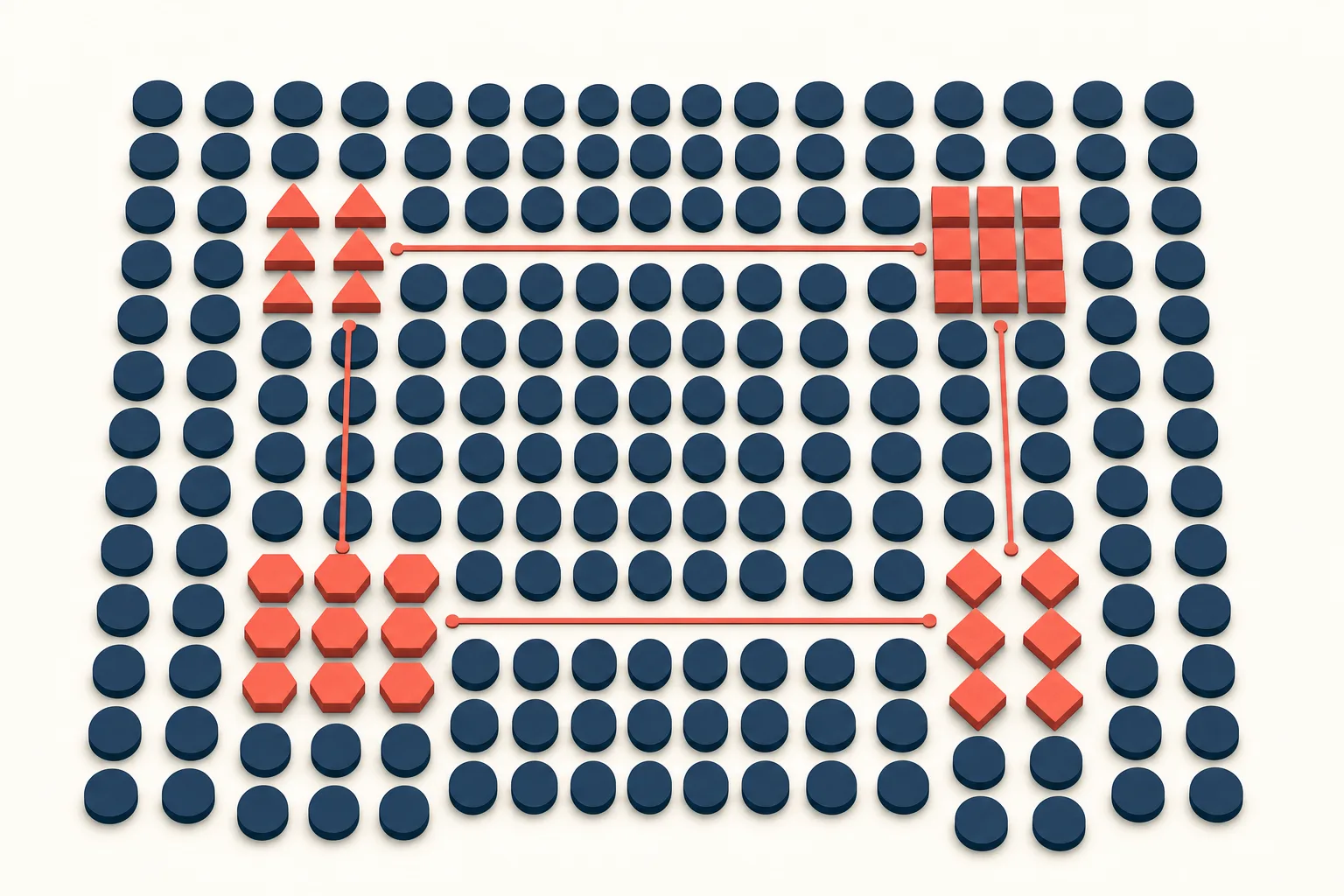
Hiring has the same two sides. The supply side is the candidates: who is available, how to find them, how to reach them before someone else does. The demand side is the seat itself: what the work requires, what the team is missing, and what a person must be to make everyone better.
For twenty years, the industry poured its money into the supply side. The entire toolchain answers one question. How do we put more candidates in front of the client, faster than before. That problem is solved. You can reach a thousand qualified people in an afternoon. Volume stopped being the constraint a long time ago.
The supply side (built)
- More resumes
- Faster sourcing
- Bigger funnels
- Outbound automation
- Resume databases
- Scraping and enrichment
The demand side (skipped)
- What the work actually requires
- What the team is missing right now
- Who thrives under this exact pressure
- What the last person got wrong
- What success looks like at ninety days
Now ask who built the tools for the other side. Who built the rigorous way to define what the seat needs before anyone goes looking? Almost no one. The demand side of hiring is still a job description written in a hurry and a vague feeling about culture. The industry got very good at finding people. Nobody got good at knowing who to look for. That is your whole problem in one sentence.
Why the interview doesn’t catch it
Here is the harder part. It moves the cause from the market to the brief you wrote.
The supply side did its job. It delivered candidates who matched the brief. The trouble is the brief. The average job description is written in fifteen minutes, increasingly with an AI assistant filling in the familiar phrases. It lists skills and years of experience. It says almost nothing about the environment those skills have to survive in.
It doesn’t say whether the team rewards independence or quietly punishes it. It doesn’t say whether the pace is reactive or deliberate. It doesn’t say whether this seat exists to bring order to chaos or to protect something fragile that already works. It doesn’t name what the last person in the chair got wrong, or what success actually looks like ninety days in.
Then the interview tests for none of that. It tests for polish, warmth, and the ability to tell a good story about past work. So the search optimized for the wrong target. The supply engine did exactly what you asked. The brief was the part that was never validated.
How to define the role before you hire
Working the demand side is not a softer version of recruiting. It is a different discipline, and it happens before sourcing, not during it.
It means treating the seat as the thing to understand first, the way a product team understands a user before building anything. What does this role actually have to produce? What has to be true about a person for this specific team to get faster instead of slower? Where does this company break people, and who tends to thrive in exactly that kind of pressure? You won’t find those answers in a candidate. They live in the company, and someone has to go get them.
Doing this well means writing down what the work actually requires and what the environment rewards, not a wish list of skills. It means scoring the seat against the factors that predict whether a person will thrive in it. Those factors are functional, social, and emotional: pace and intensity, autonomy, how someone needs recognition, handles ambiguity, and relates to authority. This is the work we built our firm around. We call the map of the role the Work Formula, and the factors the 32 Work Drivers. We spend the first two weeks on them, before we source a single candidate.
You score the seat against those factors before measuring a single candidate against anything. That is the demand side, defined and written down. Only then does the search begin, and now it has a real target. If you want the full mechanics, you can read how discovery-led hiring works. The point is the order of operations. Demand first. Supply second. The industry runs it backward.
This is not a longer job description
The fair objection is that this sounds like a thorough job description, and every company believes it already writes one. The answer is no, and the difference is the whole point.
A job description lists tasks and credentials. It describes the work in the abstract. Defining demand describes the work in your specific company, against your specific team, under your specific pressure. It names what the last person got wrong. It names what the team is missing right now, not in general. It maps behavior, not just skills: how a person needs to handle ambiguity, pace, authority, and recognition to thrive in this exact seat.
We measure that against the 32 Work Drivers and write it down before we source anyone. A job description tells a candidate what to apply for. A defined demand tells you who will actually succeed. Those are not the same document, and they do not produce the same hire.
How much a bad hire actually costs
This is worth the effort because the failure is expensive. A bad hire at the hundred thousand dollar level costs around $240,000. That counts lost productivity, the cost of replacing them, and the drag on the people around them. The U.S. Department of Labor puts the direct cost alone at roughly thirty percent of first-year salary. A wrong hire is one of the most expensive mistakes a small team can make.
So why does almost no one work the demand side, if it prevents the most expensive error in hiring? The answer is not ignorance. It is incentives.
Most recruiting is paid on contingency: a percentage of the salary, collected when the seat is filled. Sit with what that rewards. It rewards filling the seat, and it rewards a bigger salary, because the fee rides on it. It does not reward two weeks of unpaid discovery. That work might end with an honest sentence: you don’t actually need this hire yet. The contingency model can’t afford the demand side. Its economics run on moving candidates quickly and taking a cut of the number. As our founder Josh Hill puts it, “when you charge percentages, you are incentivized to inflate salaries. When you charge flat fees, you are incentivized to deliver results.”
That is why our placements stay. 90% are still in their role after eighteen months. We don’t get that number by finding rarer people. We get it by defining the demand so precisely that the right person is recognizable when the search begins.
The work is upstream
Here is what changes when you accept that hiring has two sides and decide to work the one everyone skips.
The search stops being a numbers game and becomes a matching problem. You are no longer hoping volume eventually produces a winner. You know what the seat needs, in behavioral detail, before you talk to anyone. Candidates prove fit against that definition through real work, not through interview performance. Both sides see the truth early, and the wrong fits remove themselves before anyone makes an expensive commitment.
Your own story changes too, and this is the part that matters most.
That is not a smaller problem. It is a fixable one. The belief underneath our whole approach is simple: hiring fails because picking is the wrong method, not because you keep choosing wrong people. You can’t fix the talent market. You can fix the definition of demand, and once you do, the sourcing you already pay for starts to work.
Stop trying to get better at picking from supply. Go build the demand side. It is the half of hiring the industry skipped, and it is the half that decides whether your hire was ever going to work.